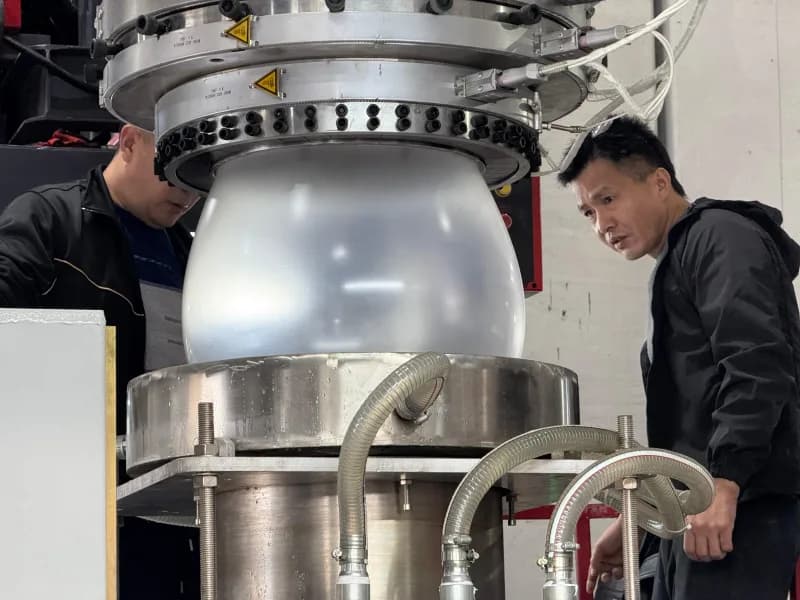
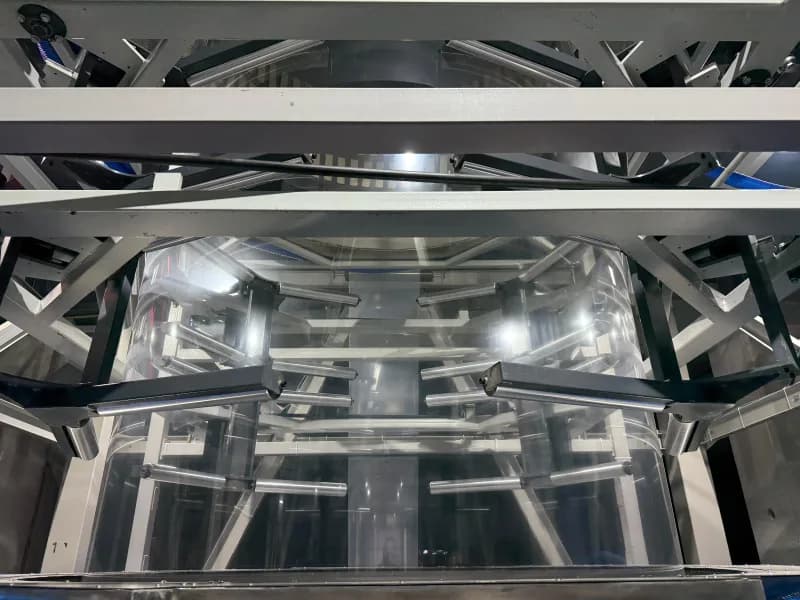
Polyolefin Production Technology
5-Layer Co-Extruded
POF Shrink Film
Five polymer layers, each with a defined job. Outer skins for seal initiation and clarity. PE core for mechanical strength. Tie layers binding the structure chemically. ABCBA symmetric architecture, ASTM-tested. Great Silver Pack co-extrusion R&D, manufactured in Balıkesir.
Interactive 3D View
Layer by Layer Co-Extrusion
Each layer carries a specific role. Hover the layers to explore material, function, and technical properties.
Technical Advantage
Why 5-Layer Co-Extrusion?
Thin Film. Premium Strength.
Three-layer film also runs on a shrink line. But 5 layers let each layer carry an independent task. Think of it as a sandwich: a 3-layer film has bread and filling pressed into each other, with no buffer between them. With 5 layers, a dedicated tie layer sits between the polymers, so each layer performs its own job and the delamination risk is engineered out. ExxonMobil identifies this architecture as the industry standard for POF shrink film.
Tear Resistance
3-layer films suffer from edge-tearing called "zippering" along the seal. The 5-layer architecture absorbs that stress through interlayer tie layers, which matters most on sharp-edged products that would otherwise puncture or split the film.
Anti-ZipperingDual-Side Sealability
The symmetric ABCBA structure makes both faces of the film perform identically at the seal jaw. Center-fold formats deliver consistent seals on every cycle of your packaging line, with no operator-side calibration drift.
Balanced SealingEven Winding
Asymmetric layer stacks curl toward one edge during winding. The 5-layer symmetric design eliminates that bias: the film stays flat, machine jams drop, and waste falls.
ABCBA SymmetryIndependent Layer Optimization
Each layer is tuned for its own job: outer layers for clarity and seal, the core for strength and flexibility, the ties for adhesion. A 3-layer architecture cannot separate these functions; every layer ends up compromising across multiple jobs.
5 Distinct FunctionsCost Efficiency
Premium polymer grades sit only in the thin outer skins. The lower-cost PE core makes up the bulk of the film. The result is premium performance with raw-material cost concentrated where it does the most work, not spread evenly across the stack.
Optimized CostIndustry Standard
Per ExxonMobil's reference documentation: the typical co-extrusion stack for POF shrink film is PP/PE/PP. Top-tier global producers use this architecture. MGS manufactures the same standard in Balıkesir through Great Silver Pack co-extrusion R&D.
PP/PE/PP Architecture| Property | 5-Layer POF | 3-Layer POF |
|---|---|---|
| Architecture | ABCBA, symmetric 5-stack | ABA, asymmetric 3-stack |
| Anti-zippering (edge tear resistance) | High | Moderate |
| Seal consistency (dual-side) | Equal on both faces | Face-to-face variance possible |
| Per-layer function separation | 5 distinct roles (seal, strength, tie, core) | Limited; 3 roles shared across layers |
| Even winding / edge curl | Symmetric architecture stays flat | Edge curl risk is high |
| Raw-material efficiency | High; premium polymer only on outer skin | Low; same polymer across the core |
| Packaging machine waste rate | Low | Moderate |
| Industry positioning | Premium / top-segment standard | Entry segment |
The 5-layer architecture is the symmetric implementation of the PP/PE/PP stack identified by ExxonMobil as the industry standard for POF shrink film. Top-segment shrink-film producers worldwide manufacture with 5-layer co-extrusion.
Layer Anatomy
5-Layer POF Film: What Each Layer Does
The breakdown below shows what each layer of MGS-manufactured polyolefin shrink film actually does. Every layer is optimized independently.
Outer Skin Layer
Seal initiation + optical clarity
Polypropylene (PP)
Seal initiation + optical clarityThe outer skin is what makes your product visible inside the package. It delivers high clarity and premium gloss. It is also the surface where sealing initiates on your shrink machinery. The specialized PP formulation begins to weld at a noticeably lower temperature than standard polypropylene.
Upper Tie Layer
Bridge between PP and PE
Special Tie-Layer Polyolefin
Bridge between PP and PEPP and PE are different polymer families and do not naturally bond. This layer acts as a chemical bridge between them. The dedicated tie polymer delivers strong interlayer adhesion, which prevents the layers from separating (delamination) during packaging or on the shelf.
Core Layer
Structural backbone
Polyethylene (PE)
Structural backboneThe thickest layer in the stack. It forms the structural backbone of the film, and mechanical strength, flexibility, and impact resistance all originate here. High-performance PE grades deliver superior tensile capability and elongation reserve.
Lower Tie Layer
Bridge between PE and PP
Special Tie-Layer Polyolefin
Bridge between PE and PPThe mirror of the upper tie layer. This is the foundation of the ABCBA architecture: when upper and lower tie layers are equal, the film shrinks evenly and stays flat. Symmetry means consistent operation on the line.
Inner Skin Layer
Dual-side seal + food safety
Polypropylene (PP)
Dual-side seal + food safetyOn a center-fold film, this is the surface that contacts your product. Because it uses the same PP formulation as the outer skin, it delivers identical seal performance from either face. FDA-compliant for food contact applications.
Production Process
Double Bubble: How 5-Layer Film Is Manufactured
The "Double Bubble" method is the foundational technology of POF shrink film production. As the name suggests, the film is shaped in two stages. MGS runs this process at industrial scale in Balıkesir, around the clock.
Raw Material Preparation
PP, PE, and tie-layer polymers arrive as granules. Each layer's blend is metered separately at the correct ratio. Performance additives are added at this stage.
Co-Extrusion
Each layer is melted in its own extruder and routed forward. All five flows are merged inside an annular die and exit as a single 5-layer tube.
First Bubble: Cooling
The hot tube leaving the die is inflated with air and immediately quenched in a cold water bath. The rapid cooling locks the polymer molecules into a controlled order. The resulting semi-finished tube is staged for the second stage.
Second Bubble: Stretching
The cooled tube is reheated and inflated a second time using internal air pressure. At this point the film is stretched both lengthwise and crosswise. The molecules align in both directions, and this biaxial orientation is what creates the film's shrink behavior.
Rapid Cooling
The stretched film is quenched immediately to lock the aligned molecular state. This "molecular memory" is what makes the film try to recover its original shape when reheated; that recovery is what we call shrink. ASTM D2732 tests confirm a high free-shrink ratio.
Winding and Quality Control
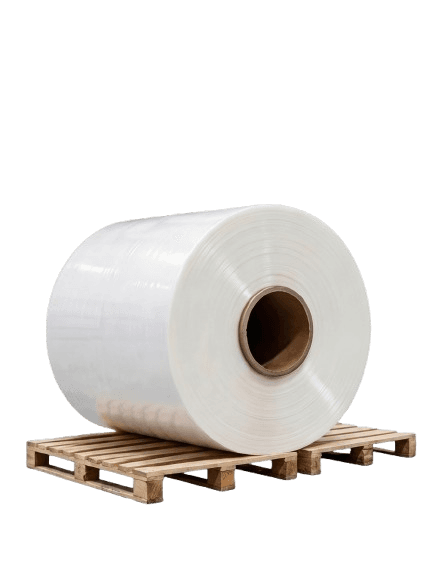
The film is flattened, slit, and wound onto bobbins. The finished thickness sits between 12 and 30 microns. The product ships as jumbo bobbin, semi-jumbo roll, or machine-ready roll.
Why Does It Shrink?
The film's shrink behavior comes from the biaxial orientation that happens inside the second bubble. Molecules are forcibly aligned in both directions and frozen in that state. When the film is reheated in the packaging tunnel, the molecules try to return to their relaxed positions, and the film contracts and wraps tightly around your product. Match the right film thickness to your machine.
Film Comparison
5-Layer Co-Extrusion vs Cross-Linked Film
Cross-linked film is treated with electron-beam radiation after extrusion. That step makes it tougher for specific applications. But for roughly 80 percent of packaging needs, 5-layer co-extruded POF is both clearer and more economical.
| Property | 5-Layer (MGS) | Cross-Linked |
|---|---|---|
| Optical Clarity (Haze) | Low (premium) | Moderate-High |
| Gloss | High | Moderate-High |
| Stiffness Modulus | High | Moderate |
| Tensile Strength | High | Moderate-High |
| Free Shrink | High | Very High |
| Tear Resistance | Moderate | High |
| Post-Processing | Not required | Electron-beam (e-beam) |
| Cost Position | More economical | Premium pricing |
When to Choose 5-Layer Film
- •Retail packaging where shelf appearance matters
- •Food packaging (FDA-compliant; no irradiation step required)
- •High-volume general-purpose packaging
- •Standard sealing equipment (L-bar, impulse sealers)
- •Applications where cost optimization matters
When Cross-Linked Film Is Required
- •Heavy or irregularly shaped products
- •Thin, delicate items (greeting cards, paper goods)
- •Lines running 60+ packs per minute
- •Systems using a continuous hot knife
- •Sharp-edged products needing extra puncture resistance
Applications
Where 5-Layer POF Shrink Film Is Used
5-layer co-extruded polyolefin shrink film handles retail packaging, food, multipack bundling, e-commerce wrap, and high-speed automated lines. Below are the primary application categories MGS supplies into.
Food Packaging
Fresh produce, confectionery, baked goods, frozen food. FDA-compliant; no harmful gases on heating. Anti-fog options prevent condensation in cold-chain displays. For fresh produce and bakery goods, hot-perforated, macro-perforated, and micro-perforated film options are available.
Consumer Goods
Toys, electronics, cosmetics, personal care. High clarity and gloss keep the product visible and the brand readable from arm's length on the shelf.
Books & Stationery
Books, magazines, stationery sets. The film leaves the product fully visible while protecting it during storage and handling.
Multipack & Bundling
Bundles of bottles, tissue packs, or grouped boxes into a single pack. High tensile strength delivers tight, secure multipacks.
E-Commerce & Shipping
Lightweight protective wrap and tamper-evident packaging. In some applications it replaces the need for a corrugated outer box.
High-Speed Lines
Consistent performance on automated packaging lines. Low coefficient of friction enables reliable feed; a wide seal window gives operators headroom.
Environment & Recycling
Environmental Benefits of Polyolefin Shrink Film
5-layer POF shrink film is fully recyclable polyolefin (SPI #4 resin code; processed in the LDPE recycling stream per ASTM D7611). Unlike PVC, it releases no harmful gases on heating and produces no dioxin if incinerated.
Advantages Over PVC
- •Releases no harmful vapors when heated; PVC emits strong, harmful odors during shrink-tunnel operation
- •Not restricted in any market; PVC use is restricted in some jurisdictions
- •Recyclable in practice; PVC (#3) is rarely accepted in mainstream recycling streams
- •Chlorine-free; PVC contains chlorine and releases dioxin and HCl when incinerated
Source Reduction (Downgauging)
5-layer POF film's high mechanical strength delivers adequate performance even at thinner gauges. Thinner film cuts raw-material consumption per package and lets a single bobbin run longer before changeover, so daily waste and operator handling both drop. Thinner film also tends to shrink at lower temperatures, which lowers energy consumption per package on the tunnel.
For a detailed thickness selection guide, visit our Machine Compatibility page.
Manufacturing in Balıkesir
5-Layer Co-Extrusion Production Infrastructure in Balıkesir
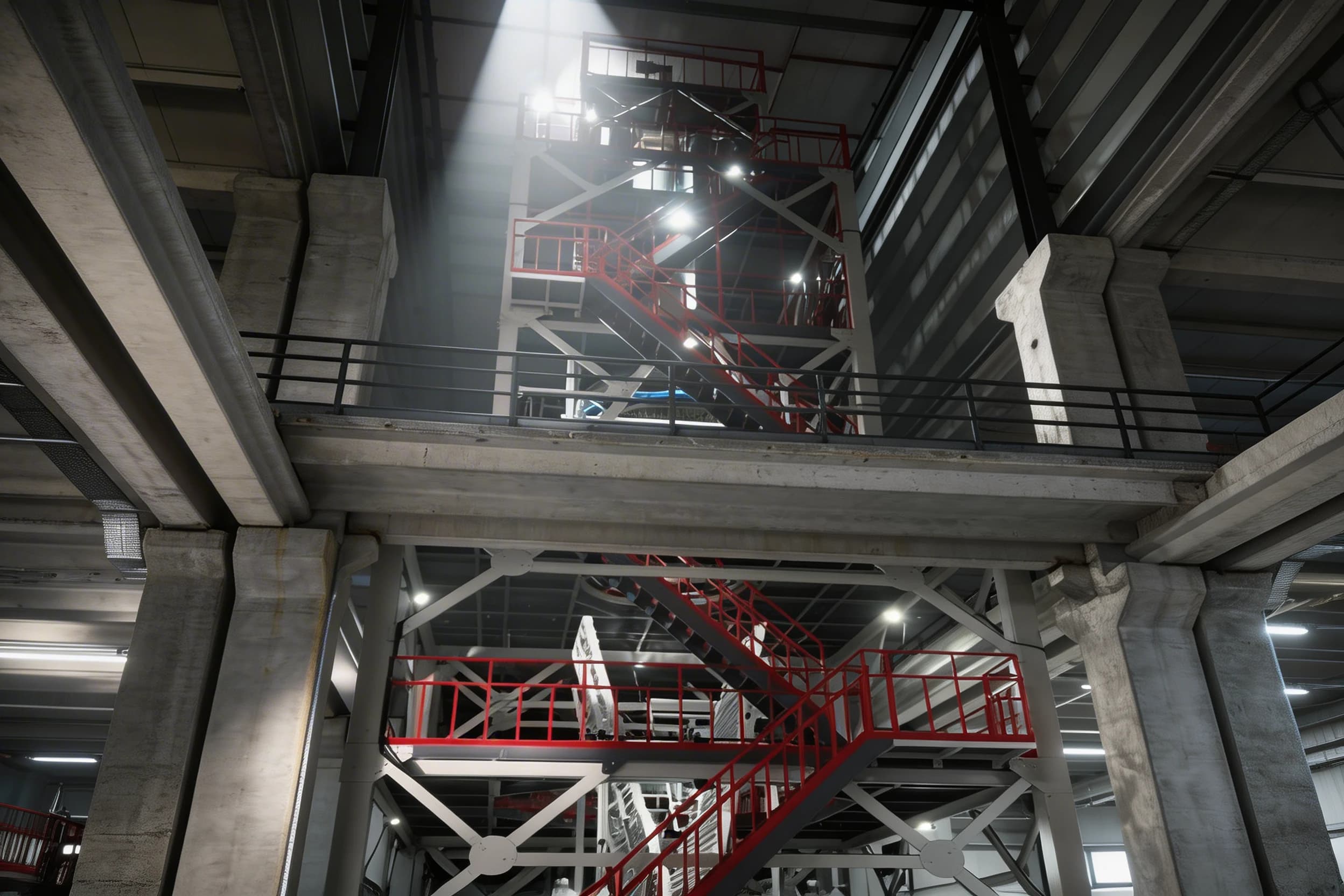
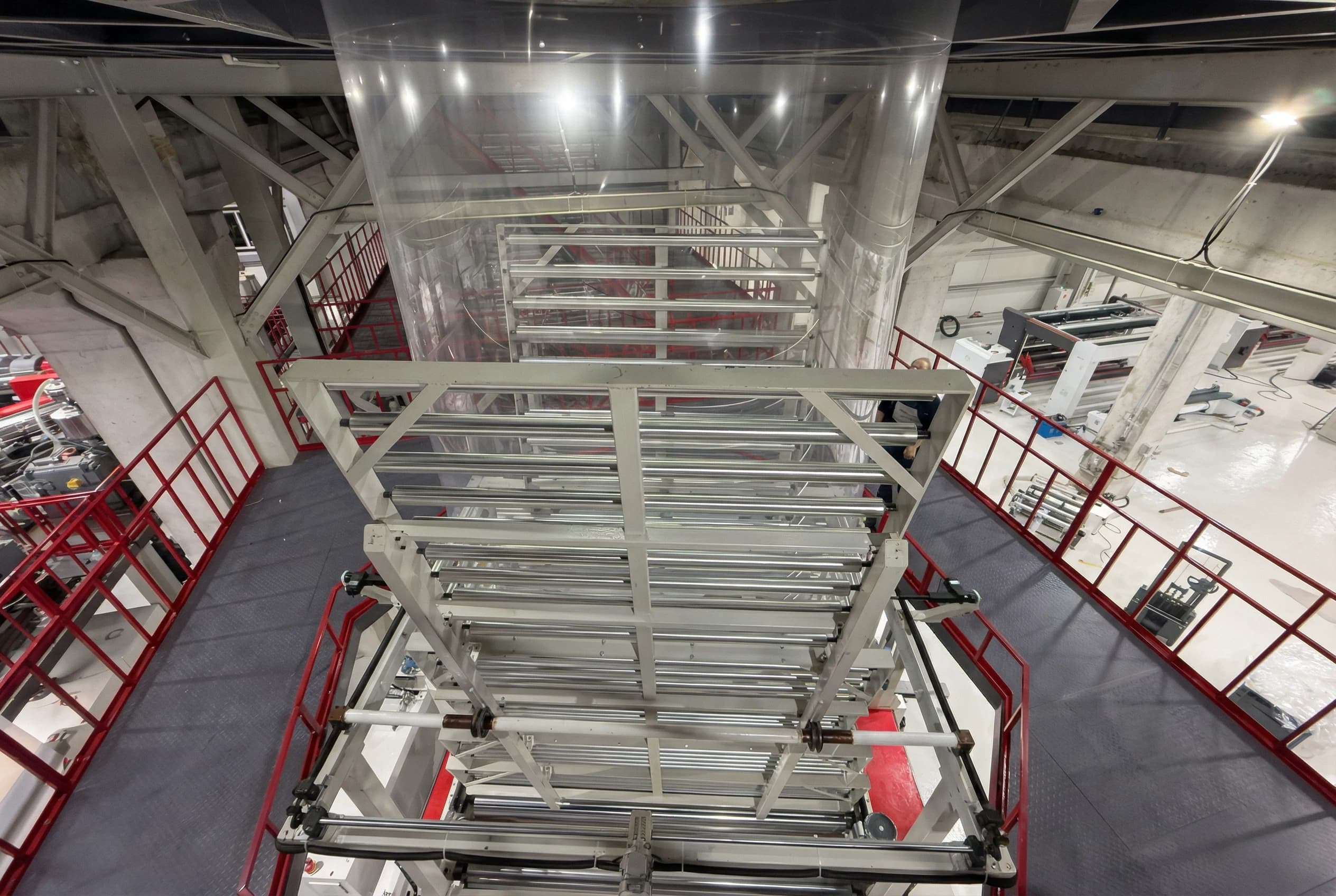
MGS operates a modern 5-layer co-extrusion line at the Balıkesir Organized Industrial Zone, built around co-extrusion R&D from technology partner Great Silver Pack. The line runs 24/7 at industrial scale, with formulation tuning and process validation handled in-house.
Frequently Asked Questions
5-Layer Co-Extrusion: Questions Answered
What is 5-layer co-extruded film?
5-layer co-extruded film is a POF shrink film technology that combines five distinct polymer layers into a single film during a single extrusion run. The outer skins are polypropylene (PP), the core is polyethylene (PE), and dedicated tie layers sit between them. This PP/PE/PP architecture is identified by ExxonMobil as the industry standard for POF shrink film.
Why is 5-layer better than 3-layer?
5-layer architecture delivers better tear resistance (anti-zippering), balanced shrink performance, dual-side seal quality, and independent per-layer optimization compared with a 3-layer structure. The dedicated tie layers prevent delamination and the symmetric ABCBA architecture eliminates edge curl during winding.
What is the Double Bubble process?
Double Bubble is the foundational method for POF shrink film production. The molten polymer is first shaped into a tube and cooled, then reheated and inflated a second time. During that second inflation, the film is stretched both lengthwise and crosswise. When the stretched molecules are reheated later in the packaging tunnel, they try to recover their original shape, and that recovery is what creates the film's shrink behavior.
Where is 5-layer POF film used?
Common applications include food packaging (FDA-compliant), cosmetics, electronics, books and stationery, multipack and bundling, e-commerce shipping, and high-speed automated packaging lines. Roughly 80 percent of shrink-packaging needs are well served by 5-layer POF film.
What is the difference between 5-layer and cross-linked film?
5-layer co-extruded film comes straight off the extrusion line with no post-processing. Cross-linked film is treated with electron-beam radiation after extrusion. 5-layer film delivers higher optical clarity and stiffness; cross-linked film delivers higher tear resistance for heavy or irregular products.
Which thicknesses does MGS produce?
MGS manufactures 5-layer co-extruded POF shrink film at 12, 15, 17, 19, 25, and 30 micron gauges. The Balıkesir facility runs 24/7 at 40 tons/day. Review the TDS Library for detailed technical specifications.
Can 5-layer film be perforated?
Yes. MGS 5-layer co-extruded POF film can be produced in three perforation types: hot-perforated (uniform micro-holes from a heated needle array), macro-perforated (larger hole diameter for high air permeability), and micro-perforated (smallest hole diameter for controlled breathing packaging). Perforated film is used for fresh food, baked goods, produce, and deli applications to prevent condensation.
What are the commercial terms?
Commercial terms — including currency, Incoterms, and payment timing — are confirmed during initial commercial discussions and tailored to each distributor relationship. Contact us to discuss a specific scenario.
Test 5-Layer POF Film on Your Line
Great Silver Pack co-extrusion R&D, Balıkesir manufacturing. Review the technical specifications or request a free sample roll.