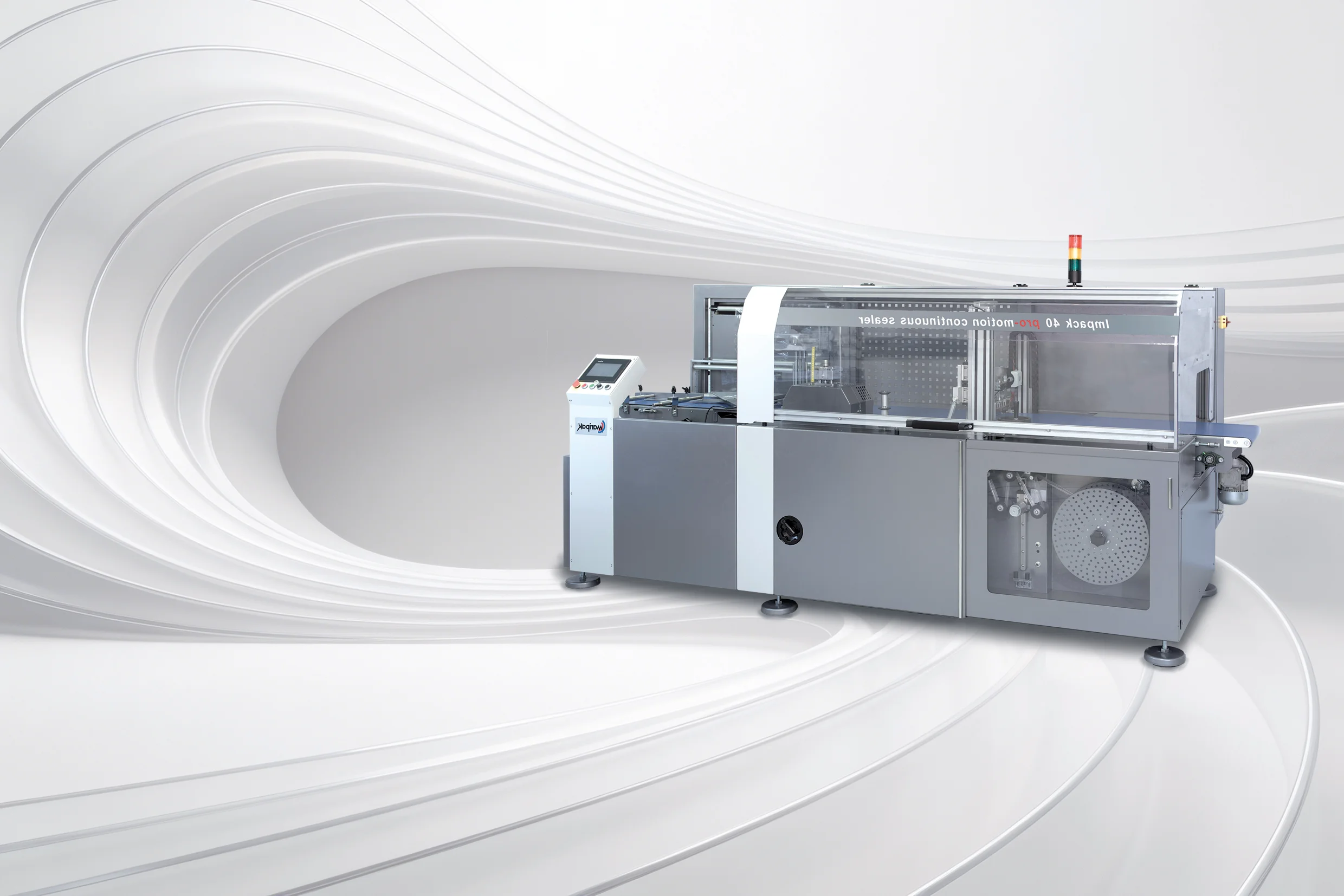
Machine Compatibility Guide
Machine-Compatible POF Film,
Validated on Maripak Machines
Which micron pairs with which machine? The right film-to-machine match cuts waste and keeps the line at its rated speed. MGS 5-layer co-extruded POF shrink film runs on every standard shrink-packaging machine — L-sealer, side sealer, sleeve wrapper, lap sealer — validated on production-grade hardware from our partner Maripak, Turkey's #1 shrink-machine manufacturer since 1989.
Right Film, Right Machine
Shrink-pack quality depends on more than the film alone. It depends on how the film and the machine work together. The wrong micron drives wrinkling, weak seals, or tear-through. MGS POF shrink film runs cleanly on every standard shrink machine, from a manual L-sealer to a fully automated packaging line.
Our 5-layer co-extruded architecture puts low coefficient of friction and anti-static behavior in the outer skins, with mechanical strength concentrated in the core. The result is consistent feed, consistent seals, and consistent throughput across machine types — operator-side or drive-side, slow line or fast line.
MGS makes the film. Our technology partner Maripak — Turkey's #1 shrink-packaging machine manufacturer since 1989, with 500 machines built per year and a 40+ country distributor network — builds the machines. Two separate companies, one factory floor for film-to-machine validation. Every gauge MGS produces is run on production-grade Maripak equipment before it ever ships to a distributor.
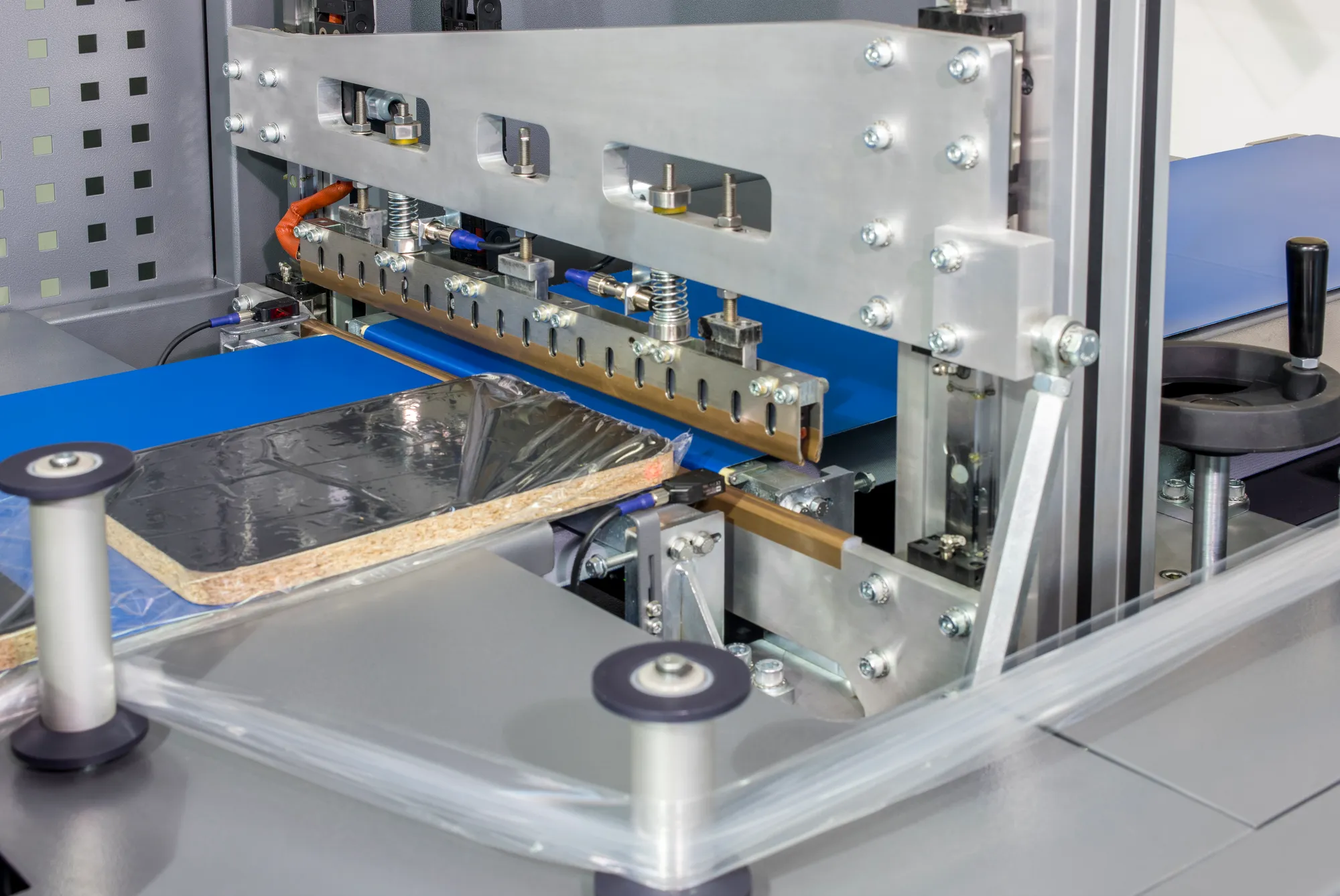
Film Compatibility by Machine Type
MGS POF shrink film runs on every standard shrink-packaging machine in the field. The table below pairs each machine category with the recommended micron range, film format, and rated line speed. Use it as a starting point for spec discussions; for a specific line, request a sample roll matched to your gauge and width.
| Machine Type | Automation | Recommended Micron | Film Format | Speed |
|---|---|---|---|---|
| Manual L-Sealer | Manual | 15 – 19 µm | Center-Folded / Single-Wound | 5 – 10 packs/min |
| Semi-Automatic L-Sealer | Semi-Automatic | 15 – 19 µm | Center-Folded | 10 – 15 packs/min |
| Automatic L-Sealer (Pneumatic / Servo) | Fully Automatic | 12 – 19 µm | Center-Folded | 15 – 25 packs/min |
| Continuous Sealer Line | Automatic | 12 – 25 µm | Center-Folded / Single-Wound* | 25 – 40 packs/min |
| Walking-Jaw Continuous Sealer | High-Speed | 12 – 25 µm | Center-Folded / Single-Wound* | 50 – 110 packs/min |
| Sleeve Wrapper | Automatic | 15 – 25 µm | Center-Folded / Single-Wound | Variable |
| Lap Sealer (Bottom Overlap) | Fully Automatic | 15 – 25 µm | Single-Wound | 30 – 250 packs/min |
* Single-wound film on these lines requires a center-folder unit on the machine to fold the flat web into a pocket before the seal jaw.
For format specifics — center-folded, single-wound, jumbo, semi-jumbo, hot-perforated, macro-perforated, micro-perforated — review the MGS product range.
Perforated Film. Tunnel Settings.
Hot-perforated, macro-perforated, and micro-perforated POF shrink film run on the same machinery as standard film. The perforations let air escape during shrink, so tunnel temperature can run 5–10 °C higher and line speed slightly slower to keep the shrink tight and uniform around the package. For the perforated-film options, see the product range.
Center-Folded or Single-Wound?
Format choice follows machine architecture, not personal preference. Center-folded film arrives pre-folded in a ready-to-use pocket and needs no extra hardware on the line. Single-wound film arrives flat — the machine wraps it around the product. Choose the format your machine is built for, and your throughput stays at the rated speed.
Choose Center-Folded When
- ✓Running an L-bar sealer (manual, semi-automatic, or fully automatic)
- ✓Running a continuous side sealer
- ✓Mixed product sizes and changing pack geometry
- ✓Small to mid-volume production or flexible scheduling
- ✓Easy film loading and broad off-the-shelf availability matter
- ✓A three-side seal pattern is acceptable on the finished pack
Choose Single-Wound When
- ✓Running a lap sealer or bottom-overlap system
- ✓Long, repeatable production campaigns on one SKU
- ✓Roll-change downtime is expensive at the production rate
- ✓A bottom-overlap seal is preferred for shelf appearance
- ✓Procurement can plan ahead and stock width-specific inventory
Seal Style and Pack Appearance
Three-Side Seal
On L-bar and side-seal machines, the pack carries seals on the front, back, and one side. No additional hardware is needed — the film is already in pocket form when it reaches the seal jaw.
Bottom-Overlap Seal
The film overlaps and seals underneath the product, leaving the visible faces of the pack clean. Preferred where shelf presentation matters: no seal lines distract the eye on retail shelves.
Three-Side Seal (with Center-Folder)
A three-side seal is also possible from a single-wound roll, provided the machine carries a center-folder unit. That hardware adds setup precision and ongoing maintenance — factor it into total cost of ownership.
Micron Selection Guide
The right micron depends on product weight, machine type, and packaging speed. Review the TDS Library for full technical specifications.
| Micron | Typical Applications | Product Weight | Machine Recommendation | Tunnel Temperature |
|---|---|---|---|---|
| 12 µm | Lightweight cartons, paper goods, single-piece wrap | < 200 g | Manual or semi-automatic L-sealer | 130 – 145 °C |
| 15 µm | Standard cartons and bottles, cosmetics | 200 – 500 g | L-sealer, intermittent side sealer | 135 – 155 °C |
| 17 µm | Mid-weight goods, multipack, food groupings | 500 g – 1 kg | Automatic L-sealer, side sealer | 145 – 160 °C |
| 19 µm | Heavier goods, industrial packaging, electronics | 1 – 3 kg | Side sealer, heavy-duty lines | 155 – 170 °C |
| 25 µm | Heavy loads, pallet wrap, glass goods | 3+ kg | Heavy-duty side sealer, sleeve wrapper | 165 – 180 °C |
| 30 µm | Extra-heavy industrial pallets | 5+ kg | Heavy-duty lines, sleeve wrapper | 170 – 185 °C |
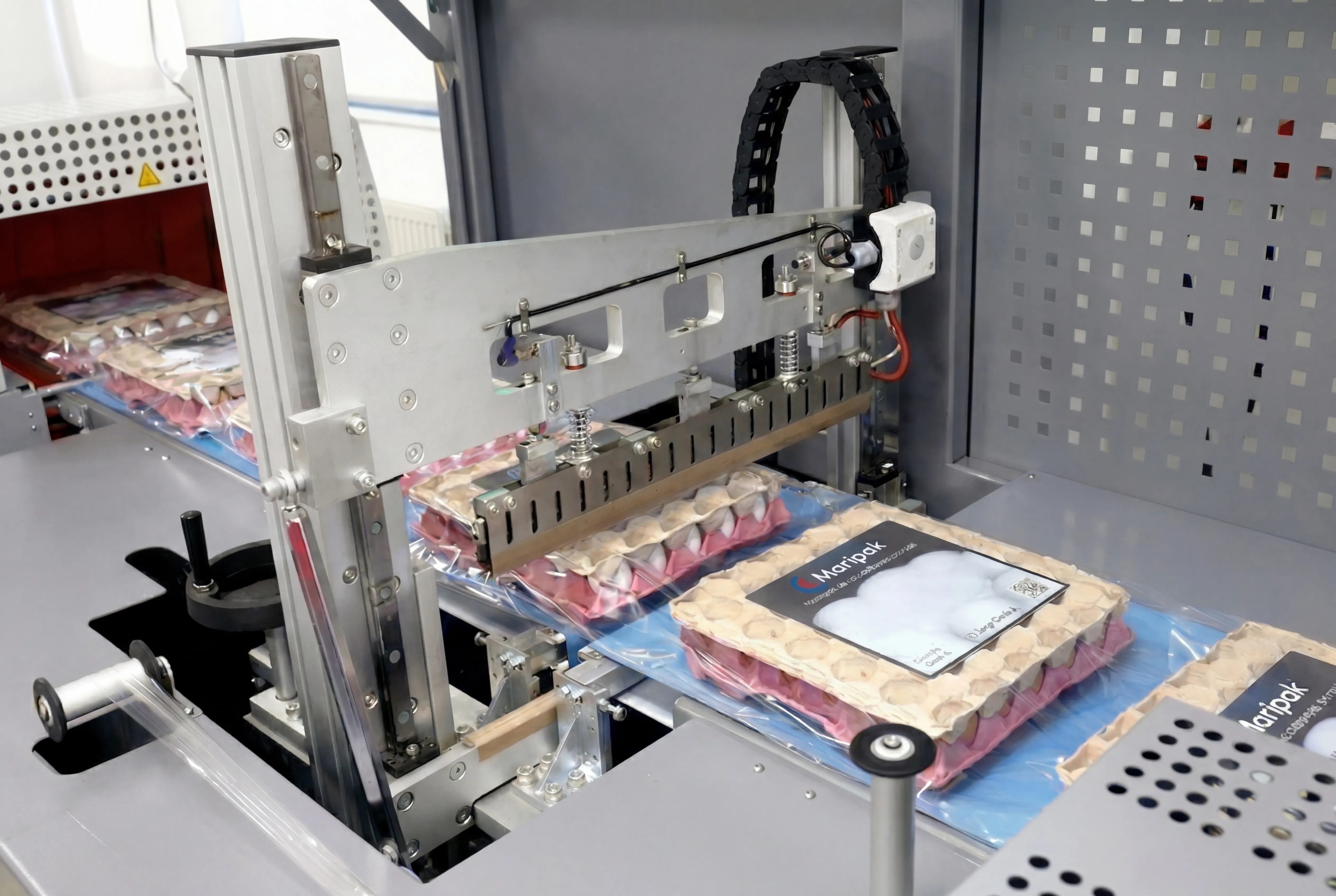
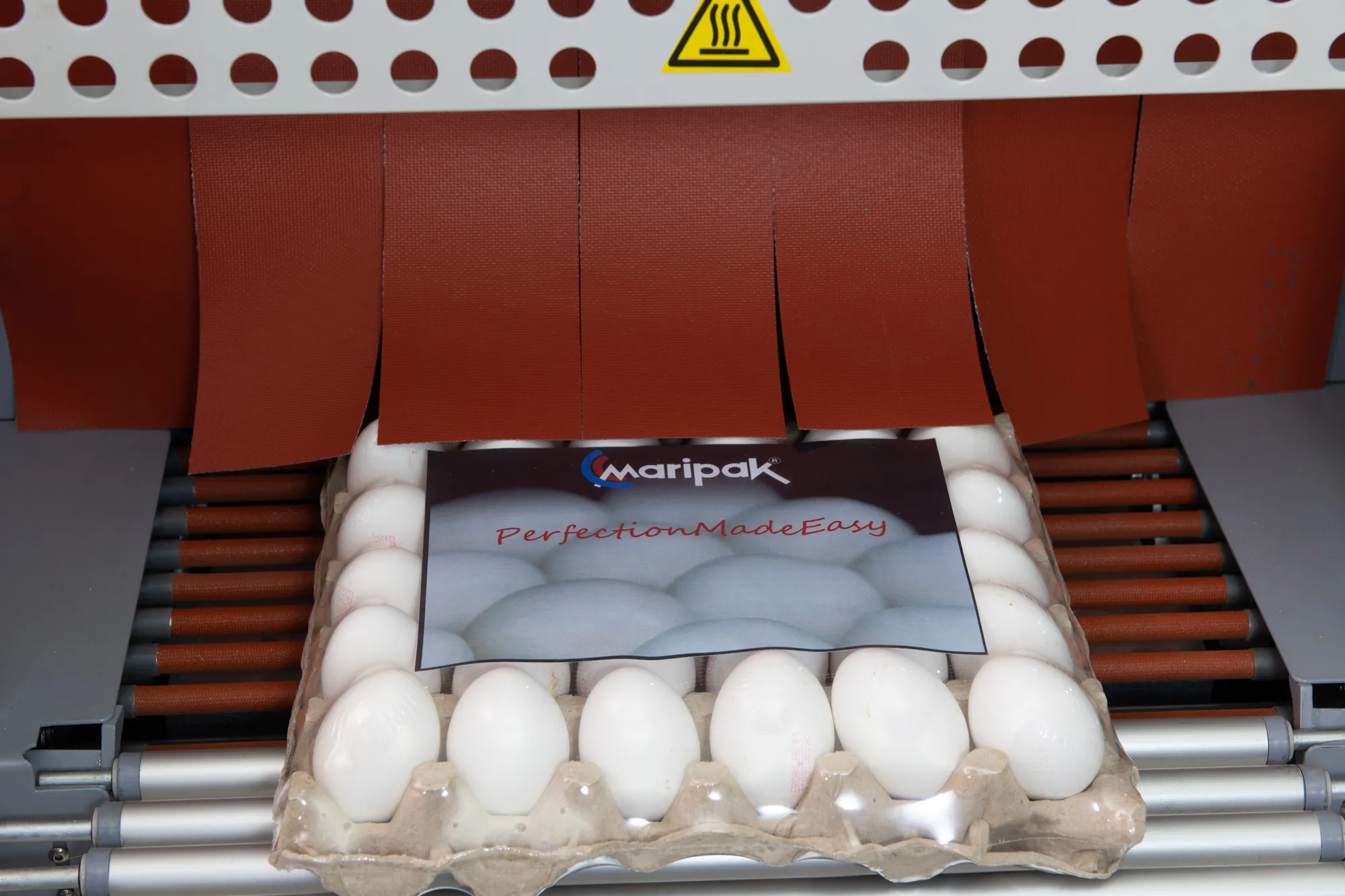
Operator Guide: Temperature and Speed
General Rule
As film thickness goes up, drop the conveyor speed or raise the tunnel temperature. The thicker the film, the longer it needs in the tunnel to fully shrink.
Thin Film (12–15 µm)
Tolerates high conveyor speed. Watch for burn-through at excess heat — raise the tunnel temperature in steps, not all at once.
Mid-Range Film (17–19 µm)
Balanced speed-to-temperature ratio. Default settings on most automatic lines work without tuning.
Thick Film (25–30 µm)
Lower conveyor speed, higher tunnel temperature. The film needs enough dwell time inside the tunnel to shrink fully and tightly.
Troubleshooting: A shark-skin texture on the finished pack means the tunnel is running too hot. A loose, incomplete shrink means the tunnel is too cold or the conveyor is moving too fast.
Frequently Asked Questions
How do I choose the right shrink film thickness?
Film thickness is chosen based on product weight, machine type, and packaging line speed. As a working rule: 12–15 µm for lightweight goods under 200 g, 15–19 µm for mid-weight goods up to 1 kg, and 19–30 µm for heavier industrial loads. The full micron-to-application table on this page covers six gauges with matched tunnel temperatures.
What tunnel temperature should I run for POF shrink film?
The working range is 130–185 °C. Thinner films (12–15 µm) shrink at the lower end; thicker films (25–30 µm) need the upper end. As line speed goes up, tunnel temperature has to rise with it — the package needs the same total heat input regardless of how fast it travels through the tunnel.
Does MGS film run on every shrink-packaging machine?
Yes. MGS 5-layer co-extruded POF shrink film runs on every standard shrink-packaging machine: L-sealers (manual, semi-automatic, fully automatic), side sealers (intermittent and continuous-motion), sleeve wrappers, lap sealers, and shrink tunnels. We recommend ordering a sample roll matched to your specific gauge and width to validate compatibility on your line before placing a production order.
Which film type is preferred on automatic packaging lines?
Automatic lines typically run 15–19 µm center-folded POF shrink film. The MGS 5-layer architecture combines a low coefficient of friction with low static behavior. That combination keeps a high-speed line feeding cleanly without sticking, jamming, or operator-side-vs-drive-side seal drift.
What is the difference between center-folded and single-wound film?
Center-folded film arrives folded in half on the roll, forming a ready-to-use pocket around the product. It runs on L-bar sealers, side sealers, and continuous side sealers without additional hardware. Single-wound film arrives flat (unfolded) — the machine wraps it around the product during the cycle. Single-wound is mandatory for lap sealers. Format choice follows the machine architecture, not the operator's preference.
Which film format does a lap sealer require?
Lap sealers (bottom-overlap systems) require single-wound, flat film. Center-folded film cannot run on lap-sealer machinery. The flat film is guided around the product by a forming plow, and the seal forms underneath as the two edges overlap.
When is single-wound film the better choice?
Single-wound film fits four conditions: high-volume fully-automatic lines (lap sealers especially), long repeatable production campaigns on one SKU, operations where roll-change downtime is expensive, and shelf-presentation requirements where a bottom-overlap seal beats a three-side seal. Single-wound rolls also carry roughly twice the meterage of equivalent center-folded rolls — fewer roll changes per shift.
Their Machines.
Our Film.
Request a Sample Roll Matched to Your Line
Tell us your machine type and current film gauge. The MGS technical team will prepare a sample roll in the right micron and format for your specific line, with a TDS sheet that maps every spec to your equipment.